
How can AI help accelerate the development of new therapies for hearing loss?
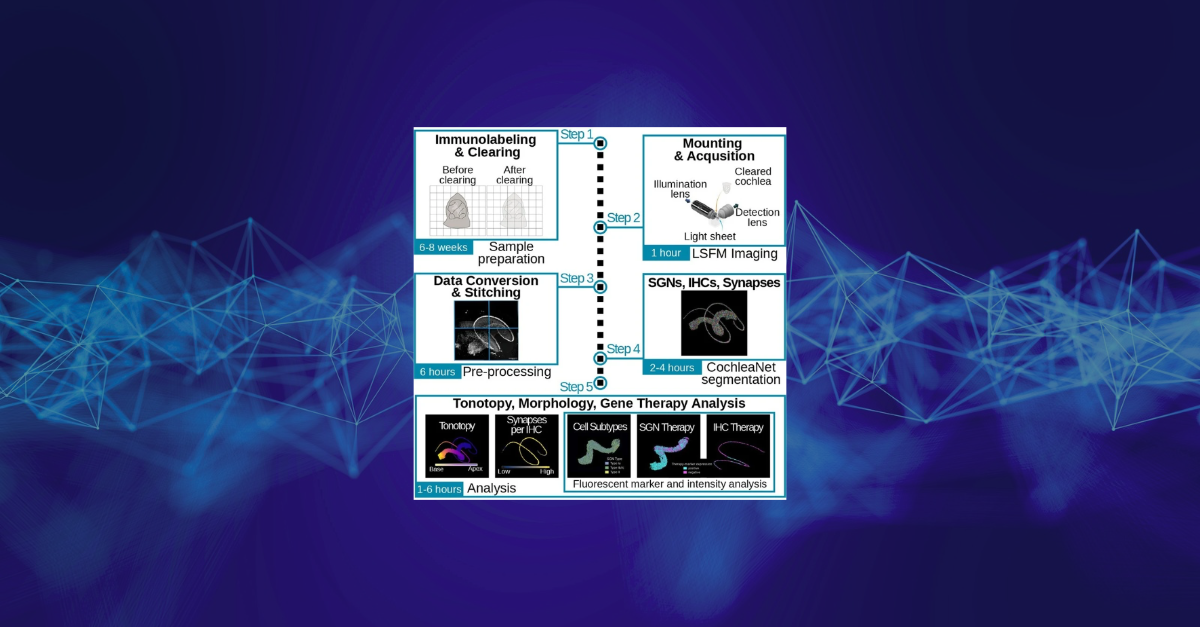
A new study in MolecularTherapy introduces CochleaNet, a deep learning framework for analysing high-resolution 3D images of the cochlea. Combining tissue clearing, light-sheet microscopy and machine learning, the approach enables automated analysis of sensory cells, auditory neurons, synapses and therapeutic protein expression.
The study involved CAIMed PI Prof. Tobias Moser and CAIMed Mentor Prof. Constantin Pape, both affiliated with the Max-Planck-Institut für Multidisziplinäre Naturwissenschaften and the Georg-August-Universität Göttingen.
By enabling faster and more comprehensive assessment of cochlear anatomy and gene delivery, CochleaNet supports the preclinical development of gene and optogenetic therapies for hearing loss.
The work aligns with CAIMed’s Sensory Restoration mission: bringing together AI, advanced imaging and neuroscience to build the evidence needed to move promising therapeutic approaches towards clinical translation.
Read the whole Article: