
3 questions for...
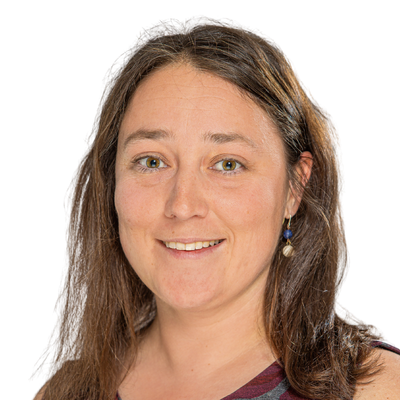
Prof. Dr. Jana Hutter
Group leader
Jana Hutter has joined Leibniz University Hannover in 2026 as Professor for Multi-Modal Signal Processing after previously holding a professorship for Smart Imaging in Erlangen and leading a group on AI-driven MRI at King’s College London.
Her research is at the interface of imaging physics and AI, combining novel concepts for acquiring more eloquent medical data with AI methods to react and adapt in real-time to the ongoing physiology and subtle signs of disease. Her research is supported by a Heisenberg professorship on self-driven MRI and the ERC Starting grant EARTHWORM on dynamic imaging of abdominal and pelvic motion, recent applications were early human development and women’s health.
1.
Was verstehen Sie unter „Smart Imaging“, und wie unterscheidet sich dieser Ansatz von klassischer medizinischer Bildgebung?
Smart Imaging reacts and adapts to the ongoing individual life - replacing predefined, rigid acquisition protocols with novel AI-guided strategies allows to detect and react individually and ultimately to obtain individual markers of health and disease.
2.
CAIMed bringt Forschende aus sehr unterschiedlichen Disziplinen zusammen. Wie profitieren Ihre Projekte davon, wenn Methodenentwicklung, Datenanalyse und klinische Fragestellungen von Anfang an gemeinsam gedacht werden?
I strongly believe that progress in this area is only possible if all disciplines work together - working closely intertwined as possible within CAIMed allows for clinical questions to inspire novel methodological developments and for novel algorithms to ultimately find real application. Seeing methods developed in my group through from the early days of algorithmic development to clinical translation is one of the most rewarding experiences for me!
3.
CAIMed verfolgt das Ziel, KI-Methoden schneller in die medizinische Praxis zu überführen. Wo sehen Sie in der medizinischen Bildgebung aktuell das größte Potenzial für eine erfolgreiche Translation?
The integration of clinical data directly into the imaging process, for example by automatically defining the most pertinent imaging views and contrasts for the individual patient and a truly integrated multi-modal analysis of the imaging data together with all available clinical data areas where I see huge potential.